
Poker remains a timeless staple for betting enthusiasts, blending skill, psychology, and chance into one electrifying experience. From casual games to global tournaments, the game attracts millions with its potential for both challenge and reward. Whether you’re new or seasoned, mastering the casino game requires insight into rules, variants, and smart decision-making. This guide by 777PT offers a sharp overview of the game’s essentials and nuances.
Essential poker rules that separate pros from amateurs
In poker, the goal is to form the best five-card hand or convince opponents to fold. Standard gameplay includes betting rounds like pre-flop, flop, turn, and river. Players can check, call, raise, or fold depending on their hand strength or bluffing strategy. Knowing the value of each move is crucial for maximizing your advantage across every round.
To navigate any poker table, players must grasp key lingo such as blinds, pot odds, position, and showdown. The small blind and big blind are forced bets that kickstart the action. “Position” refers to your order of play relative to the dealer later positions typically offer more strategic control. Understanding these terms helps players communicate and calculate risk effectively in fast-paced games.
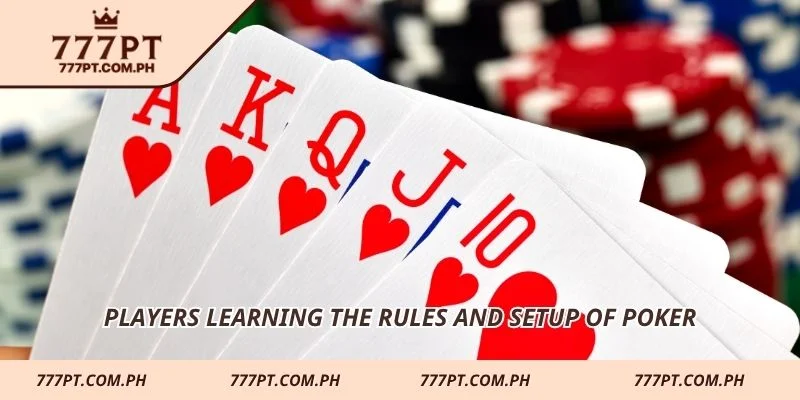
Hand rankings determine the outcome of every poker showdown. The highest-ranking hand is the royal flush (A-K-Q-J-10 same suit), followed by straight flush, four of a kind, full house, and so on. A strong grasp of these rankings helps players decide whether to bet, raise, or fold. Even experienced players refer back to these fundamentals when evaluating complex board scenarios.
Exploring poker formats and play styles

As the casino game evolves, so do its formats. Each version caters to different player types, risk levels, and strategies. Whether you prefer quick rounds or endurance-based competitions, there’s a format to fit your style.
No-limit Texas Hold’em breakdown
No-limit Texas Hold’em is the most popular poker format worldwide. Players receive two hole cards and use five community cards to build their best hand. The “no-limit” aspect means players can bet all their chips at any time, creating dramatic showdowns. Mastering this version demands reading opponents, calculating pot odds, and knowing when to bluff or go all-in. Strategic depth is what draws professionals and casual players alike.
Beyond raw luck, success hinges on timing, bankroll management, and emotional control. Position at the table significantly affects decision-making, as acting last provides more information. Tournaments often feature escalating blinds, adding pressure as play progresses. Consistency and adaptability are key traits for long-term winners, while observational skills help decode betting patterns and player tendencies.
For serious bettors, tracking hand histories and reviewing replays can reveal critical leaks or patterns to exploit. No-limit Hold’em rewards both bold moves and disciplined play, making it a dynamic and endlessly compelling betting arena.
Key features of tournament play
Tournaments add a competitive edge to the casino game, where players pay a buy-in for equal chip stacks. The goal is to outlast others and earn a share of the prize pool. Blinds increase over time, pushing players to adapt. Success in tournaments requires patience, aggression at key moments, and the ability to adjust to changing stack sizes and player dynamics.
Comparing cash games vs. sit & gos
Cash games and sit & gos offer contrasting experiences in poker. Cash games allow players to buy in and cash out anytime, with blinds remaining static. Sit & gos are one-table tournaments with fixed entries and payouts, perfect for short, intense sessions. Understanding the strategic differences between these formats helps players choose the most profitable setup for their goals.
Developing effective poker strategies

Beyond rules and formats, true success in the game comes from strategy. This involves more than playing the cards, it’s about reading people, calculating odds, and managing risk.
Reading opponents and body language
One of the most powerful skills in poker is reading opponents. This includes spotting physical tells, such as nervous gestures or changes in posture, and detecting betting patterns that reveal hand strength. Advanced players often disguise their intentions while decoding others’ moves. Strategic observation often makes the difference between winning and losing big pots. In live games, eye contact, chip handling, and timing can offer subtle cues about confidence or uncertainty.
Online, players rely more on timing tells, bet sizing, and history tracking. Recognizing when a player consistently bets big with weak hands, or slow plays with strong ones, can inform optimal counter-strategies. Skilled readers create psychological profiles, adjusting their tactics to exploit each opponent’s tendencies. It’s not just about recognizing behavior but predicting future actions based on evolving dynamics. Mastering this skill requires patience, focus, and a strong memory, all of which contribute to a decisive edge at the table.
Bankroll management and discipline
Winning consistently in the game requires strict bankroll management. This means only playing stakes that align with your total funds and avoiding emotional decisions. Setting loss limits, tracking sessions, and maintaining a calm mindset preserve longevity at the tables. Discipline separates pros from amateurs, especially during inevitable downswings.
Knowing when to fold or go all-in
Timing is everything in the game. Folding a strong-looking hand can be the smartest move if signals point to a better opponent hand. Conversely, going all-in can pressure others into folding marginal hands. Recognizing these moments requires experience, math, and intuition. Players who master these choices elevate their success rate across formats.
View more: Blackjack – Strategies And Rules Every Bettor Must Know
Conclusion
Poker continues to captivate players with its mix of logic, risk, and psychology. From learning hand rankings to crafting long-term strategy, there’s always something new to master. This guide from 777PT is a starting point for anyone looking to refine their skills or explore the game for the first time. With preparation and patience, the game can become both an exciting pastime and a profitable pursuit.





